

Report a Swarm or Colony Removal
Got bees? Don't panic! The Lower Eastern Shore Beekeepers are here to help.
If you’ve found honey bees on your property, we can connect you with a local expert. However, before you request assistance, please be aware that there is a significant difference between a passing swarm and an established colony that has moved into a structure.
Please read through the visual guide below to understand the difference. Once you know which situation you are dealing with, please fill out the form at the bottom of this page and be as detailed as possible. The more information you provide, the faster we can pass it along to the right professional for your specific retrieval or removal!
🌿 1. The Swarm: Temporary Visitors
A swarm is a natural, beautiful part of a honey bee colony's reproductive cycle. When a hive gets too crowded in the spring, half the bees leave with the queen to seek out a new home. While scout bees search for the perfect hollow tree or cavity, the rest of the swarm will cluster together in the open.
Behavior: Because they do not have a home, baby bees (brood), or honey stores to protect yet, swarms are generally very calm and docile. They are just resting!
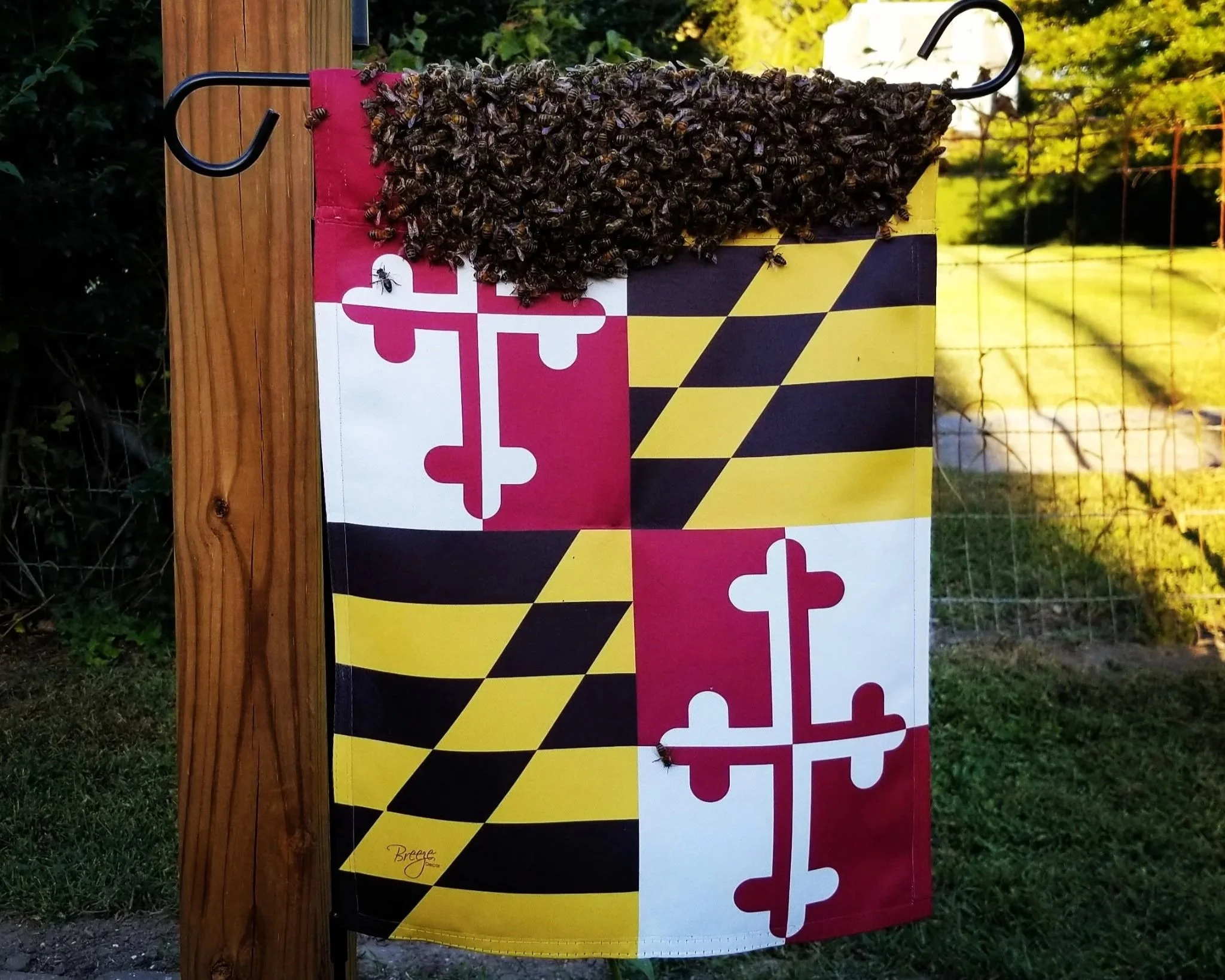
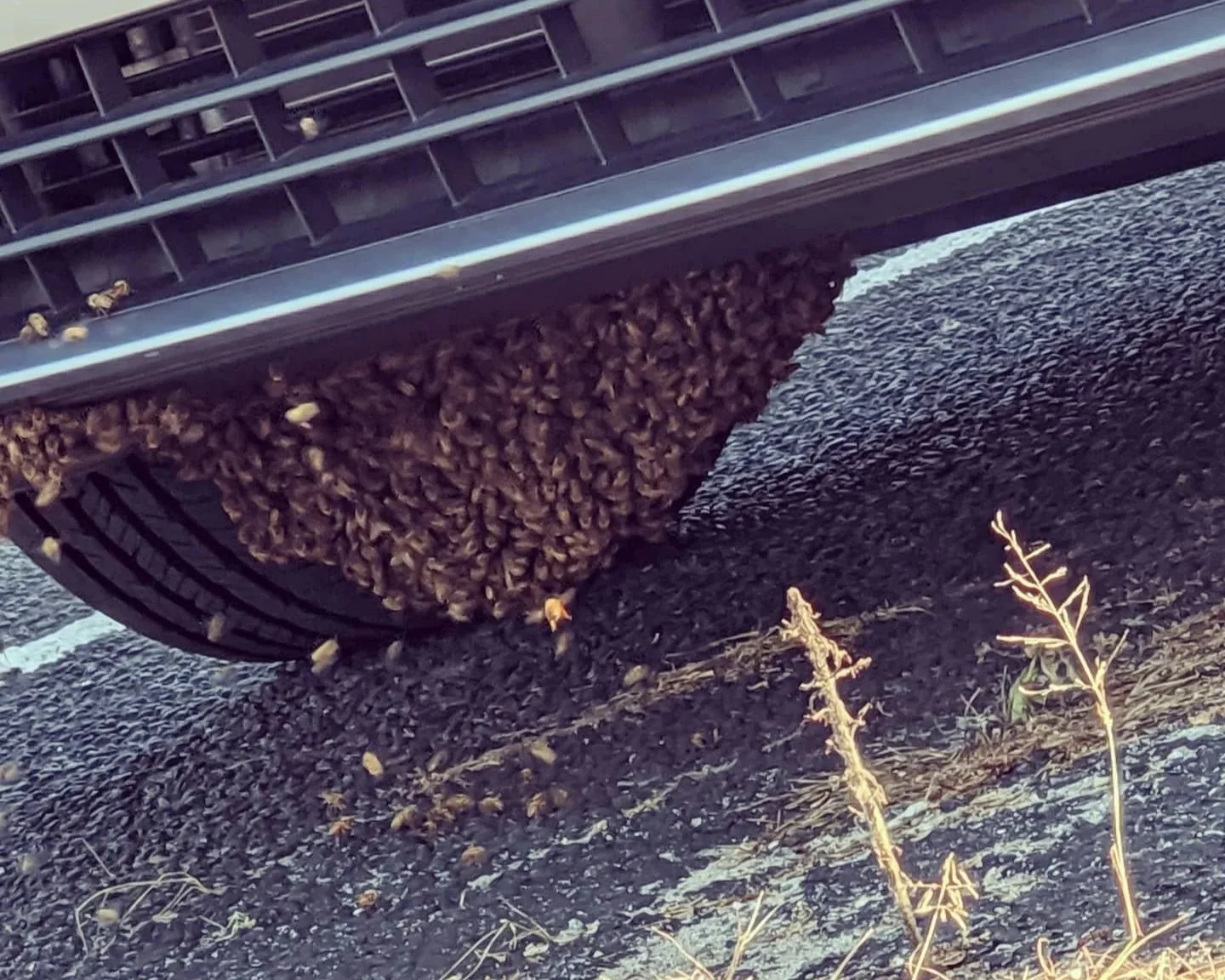
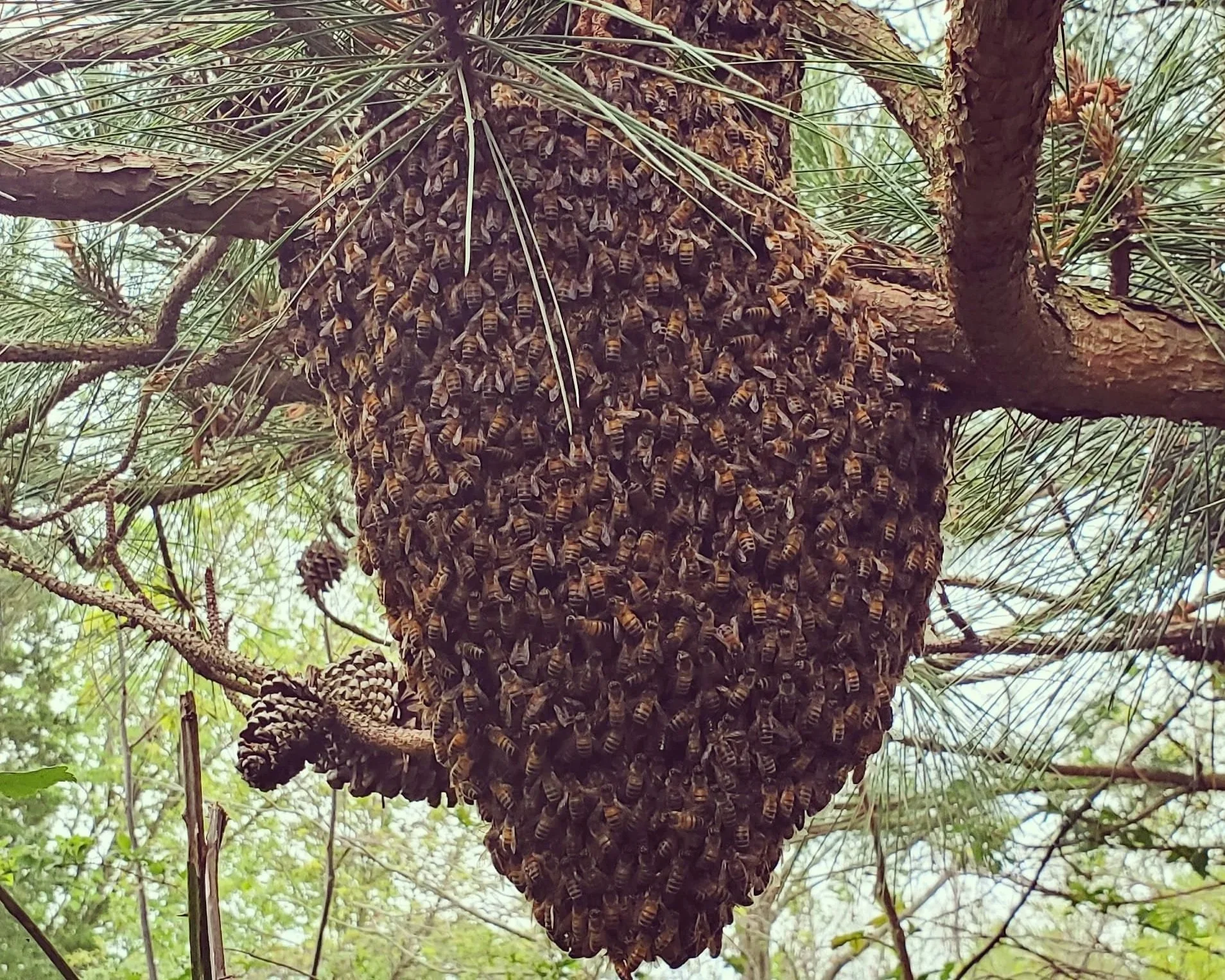
What it looks like: A large, solid cluster or "ball" of bees hanging openly on a tree branch, fence post, lawn furniture, or even a flag.
The Process: Capturing a swarm is a relatively quick rescue. A beekeeper can usually shake or gently brush the cluster into a transport box to relocate them safely to a local apiary.
The Cost: Because it is an accessible, low-risk process, many of our local beekeepers offer swarm retrievals as a free conservation service to the community.
🏗️ 2. The Established Colony: Structural Extractions (Cutouts)
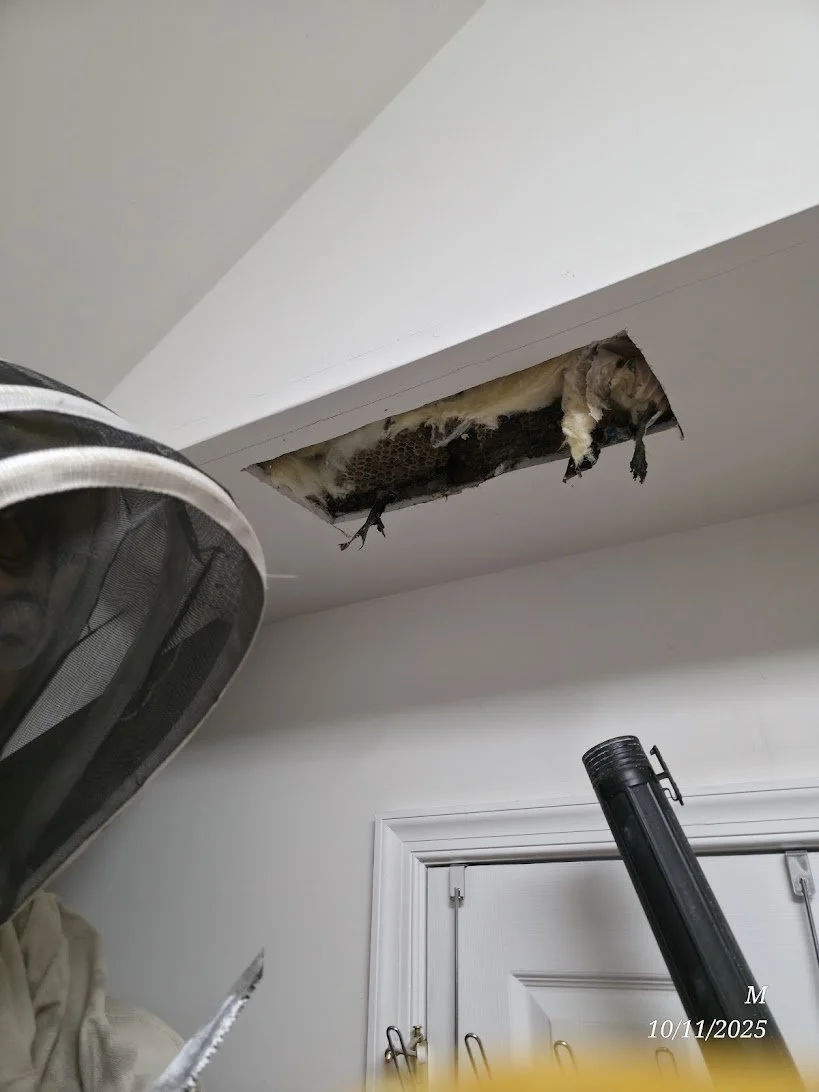
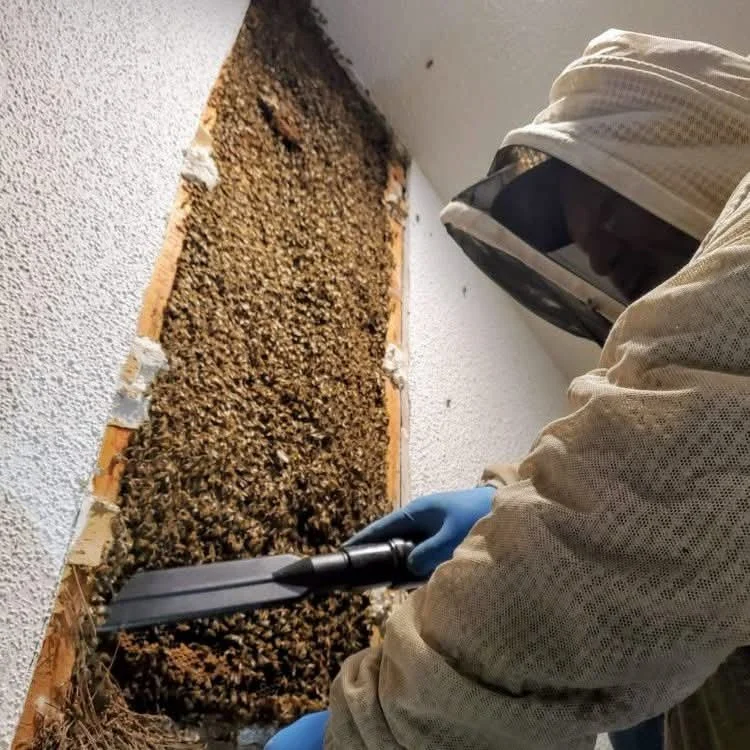
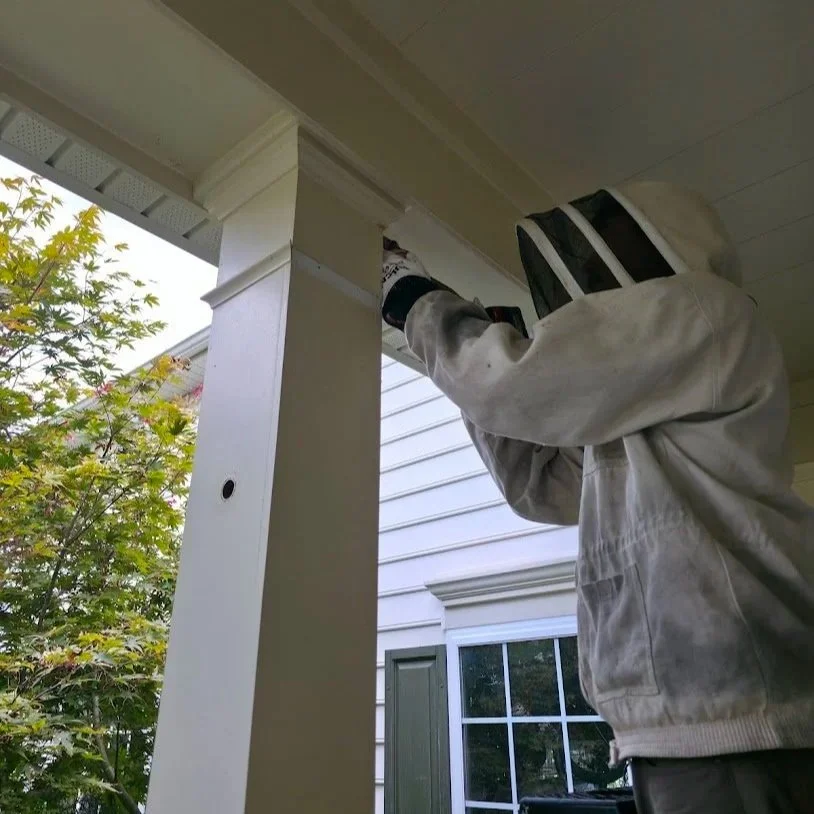
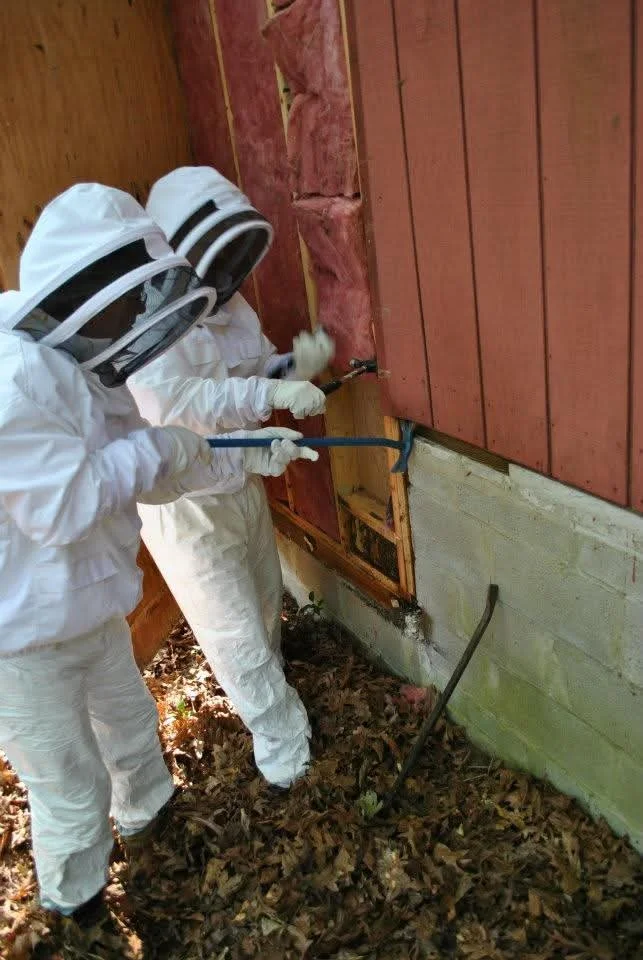
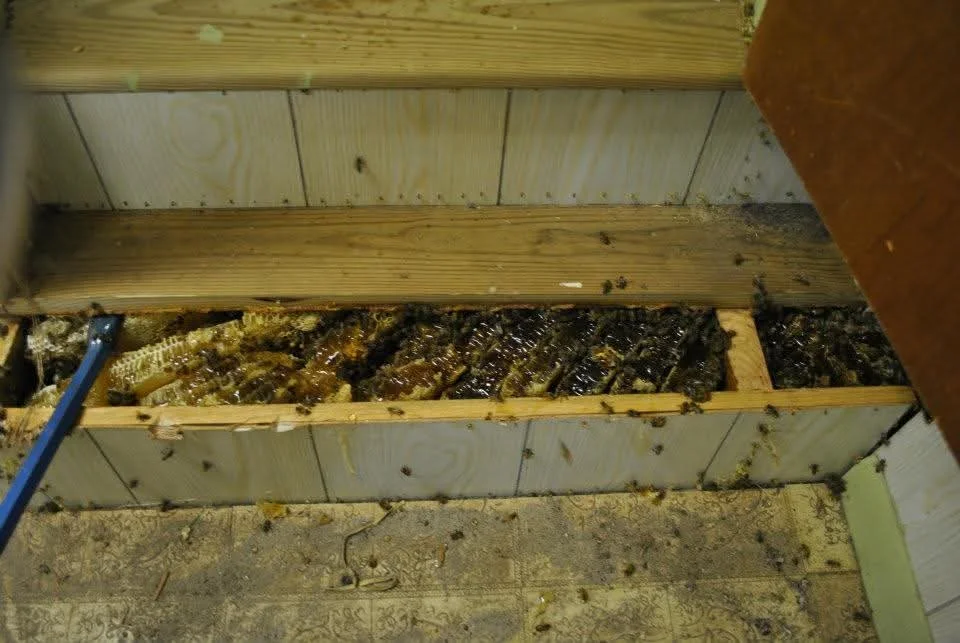
If the bees are no longer clustered out in the open but are instead flying in and out of a gap in your siding, soffit, shed, roof, or floorboards, they are no longer a swarm. They have officially moved in, built wax comb, and started raising a family.
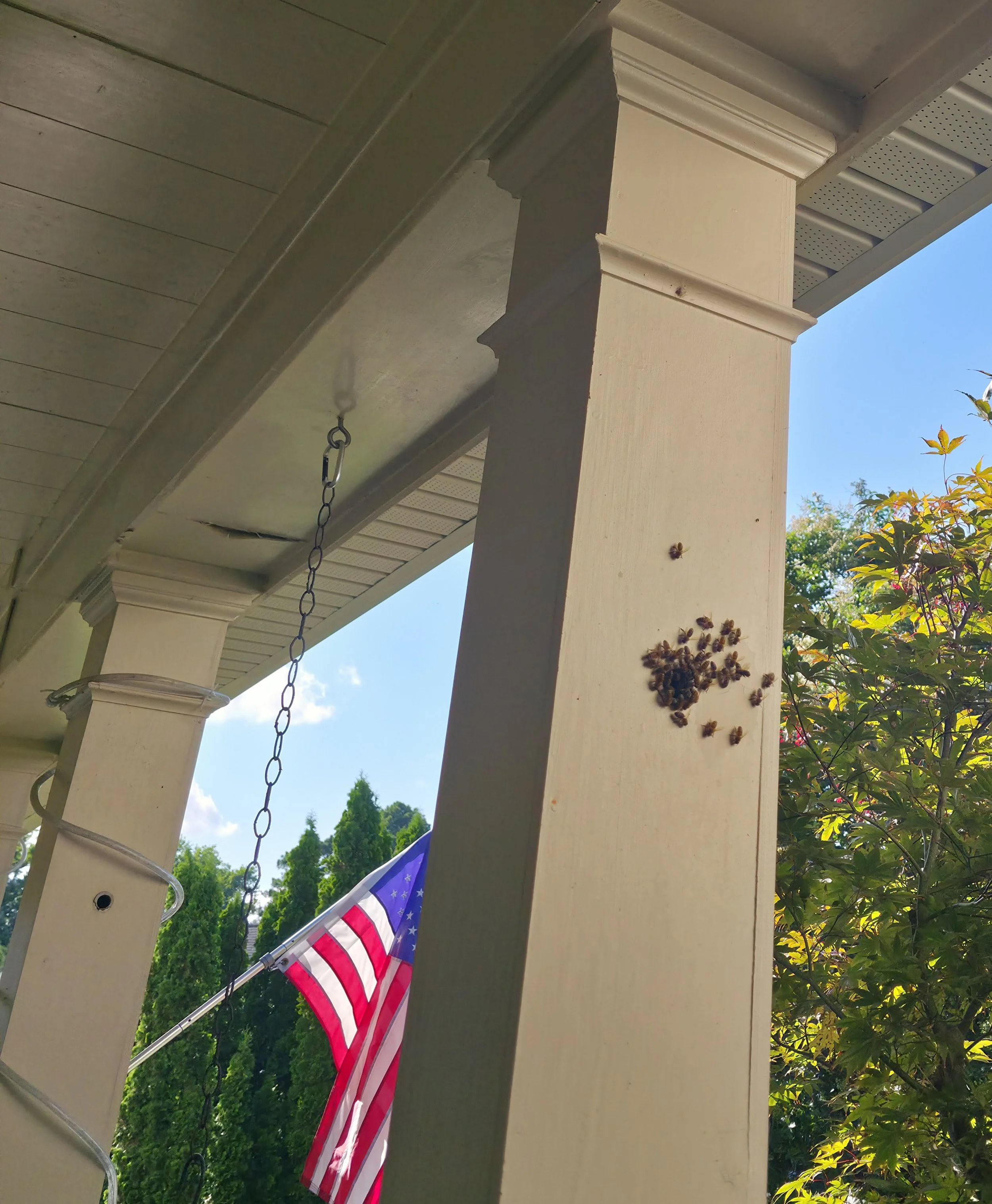
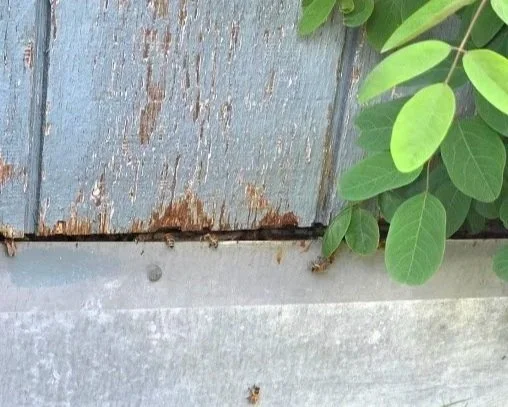
What it looks like: You will usually only see a few dozen bees acting as "guards" or foragers flying in and out of a small hole. However, behind that wall or floorboard could be a massive colony.
Behavior: Once bees have an established home and a nursery to protect, their attitude changes. They are naturally defensive and will actively guard their space.
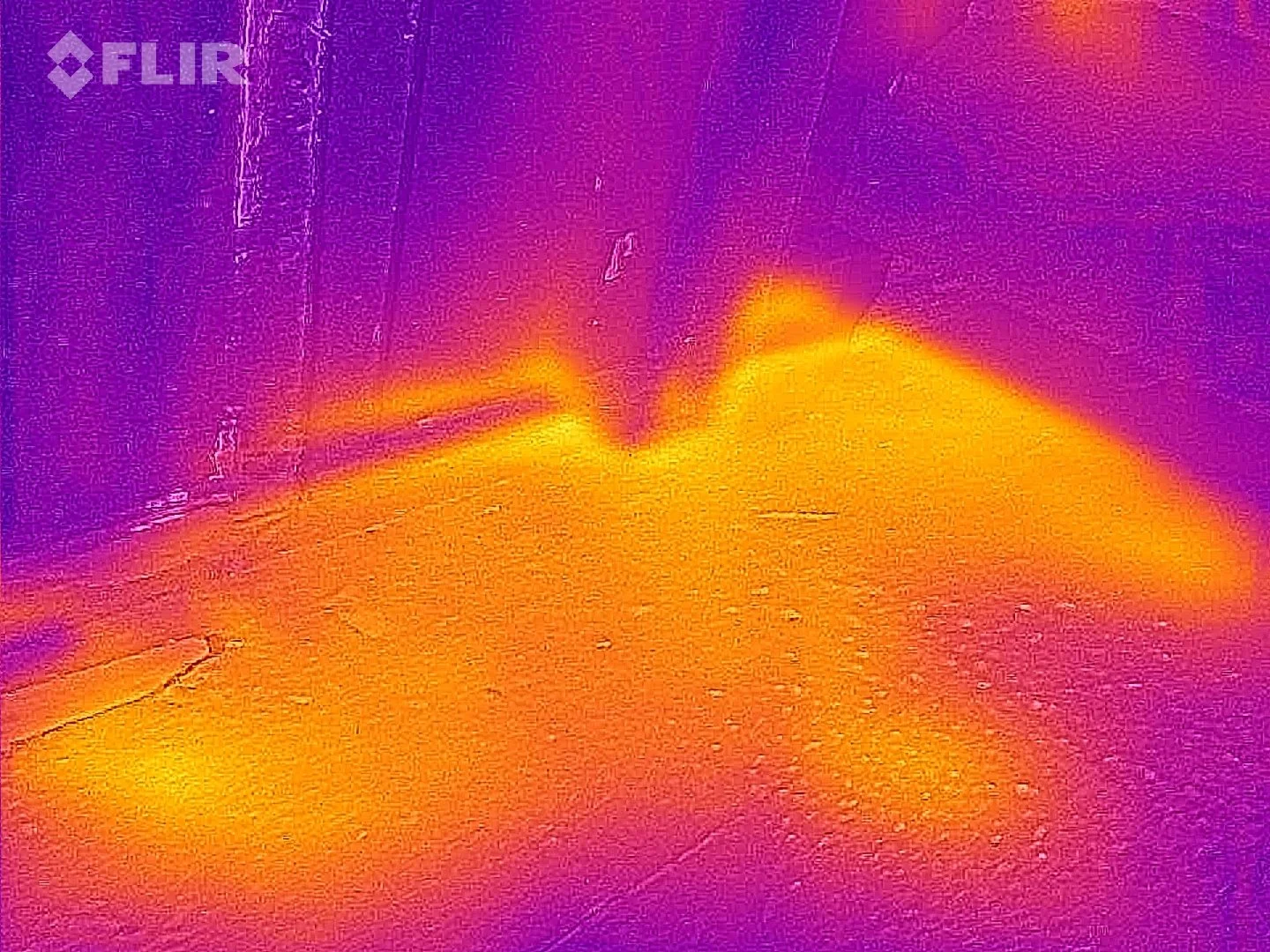
This FLIR thermal image reveals the incredible heat signature generated by thousands of bees keeping their brood (babies) warm, hidden right behind the wood."
The Process: Relocating an established colony requires a procedure known as a "cutout." This requires structural demolition (opening up the wall, roof, or floor) to physically access the cavity. Beekeepers use specialized gentle vacuums to collect the bees safely, then spend hours meticulously cutting out every single piece of sticky honeycomb. (Note: Beekeepers are not general contractors; post-removal structural repairs are the responsibility of the homeowner).
Because of the deep expertise, specialized equipment, liability insurance, and hours of intensive labor required, colony removals are a professional service that involves a cost.
📥 Submit Your Report
Ready to get in touch? Please use the form below to report your bees.
Help us help you by being as detailed as possible! Let us know:
Exactly where the bees are located on the property.
Approximately how high off the ground they are (do we need a ladder?).
How long you have noticed them there.
Whether you think it is a swarm or an established colony based on the guide above.
(🚨 Safety tip: While you wait to hear back from us, please observe the bees from a safe distance and never use pesticides, wasp spray, or water on them!)